50 Years of Doctor Who: Tom Baker

What happened to April? I’m still not sure, so let me just be brief: it was probably one of the busiest/craziest months I can remember for me, and I’d love for any future months to take that as a warning that I shouldn’t ever have quite so much going on ever again.

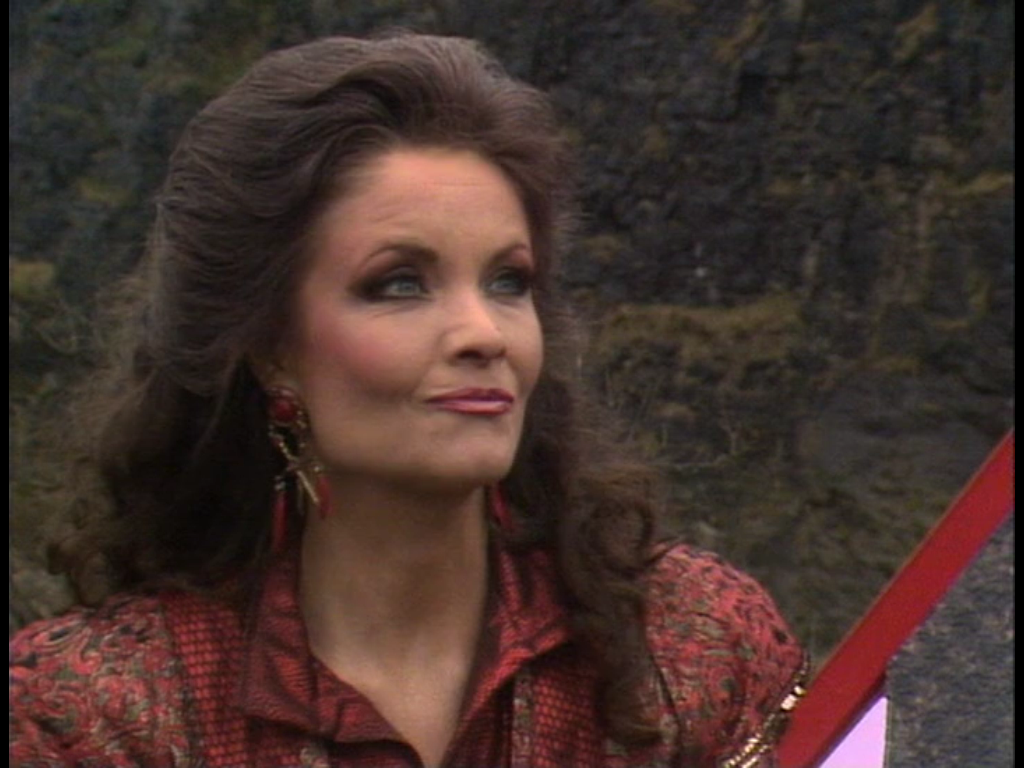
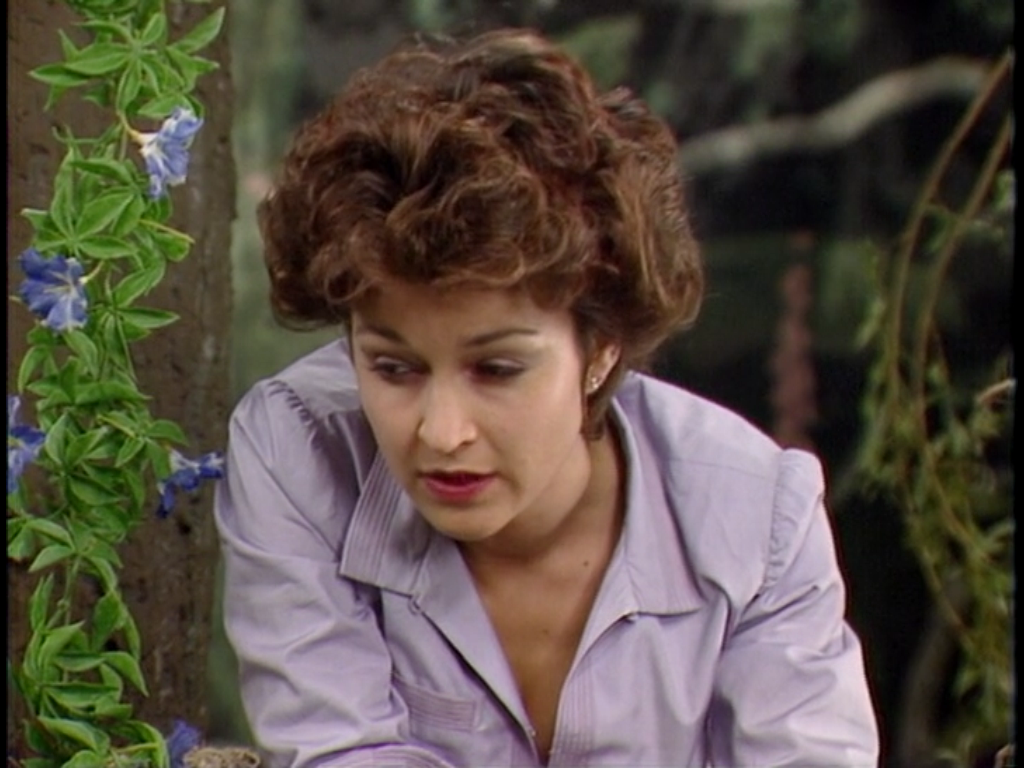
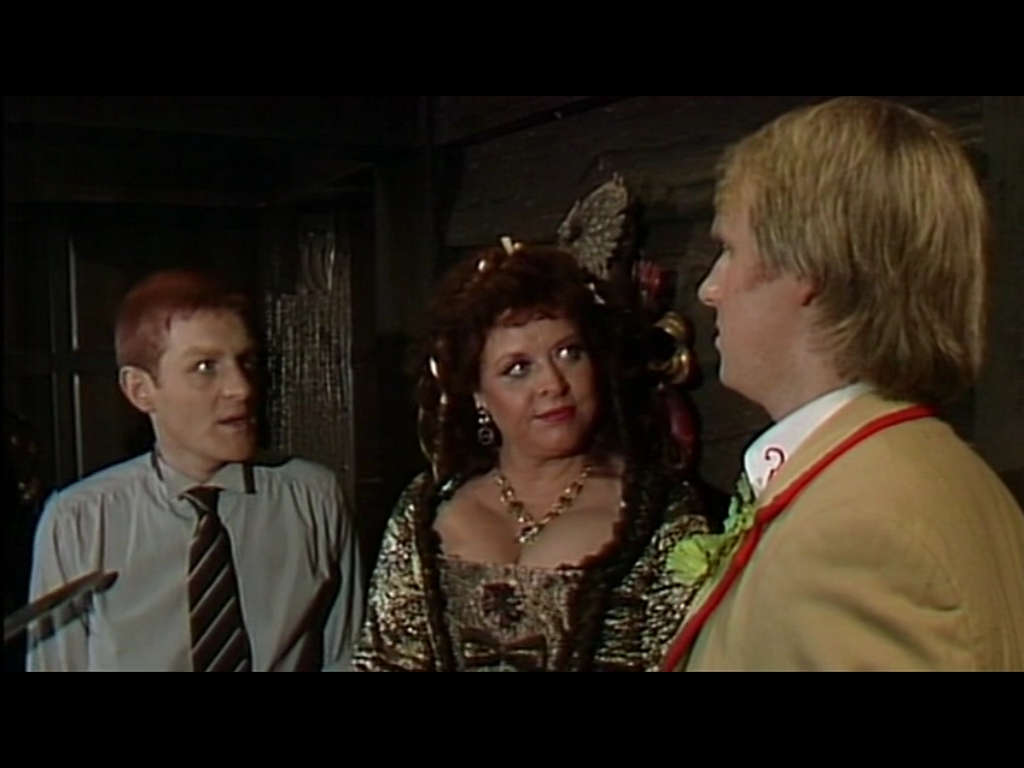
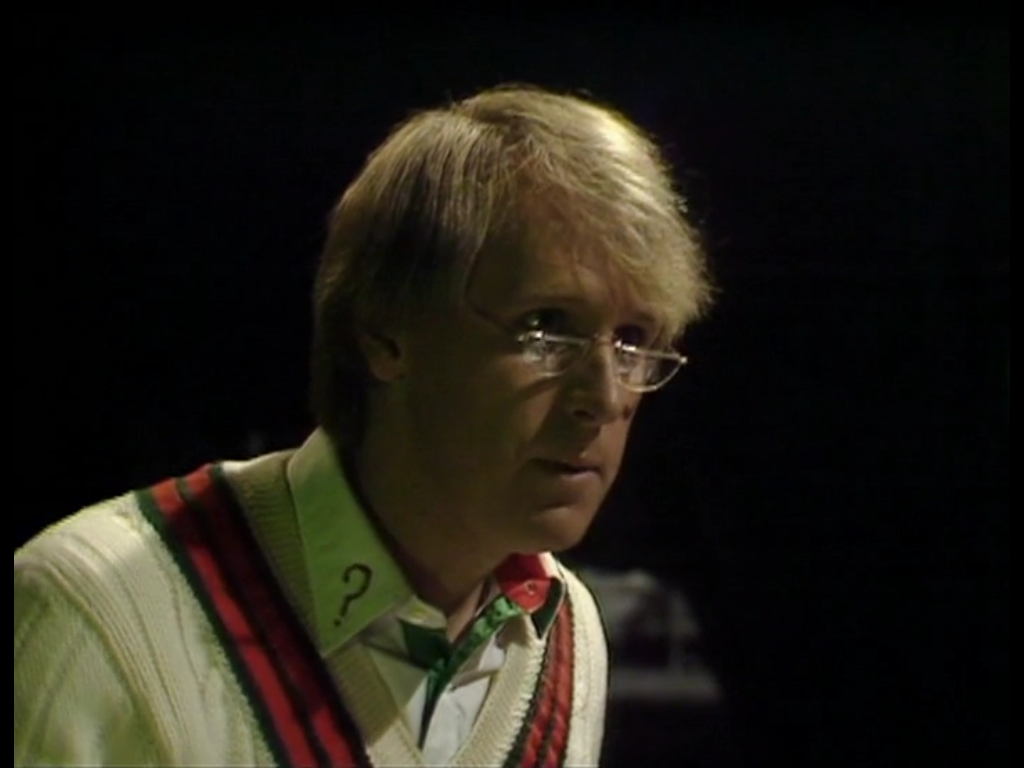
Anyway, April meant this month’s Doctor Who episodes were the Tom Baker era, and in doing so I found myself in a bit of a quandary. Tom Baker was on the show for a record-holding seven years, and went through multiple producers and script editors. He’s also for the original series, the face of the show in the United States. While I was extremely lucky to grow up in an area that had two PBS stations that showed all eras of the show, for many areas all they got were Baker’s stories.

With so many stories to pick from—including some favorites near and dear to my heart—I ended up deciding to start with three stories that most consider “classics” but which I’d never actually seen. (I know, I know. For two of them I read the novelizations growing up and the third… well… I’d seen lots of bits and pieces but never sat down and watched it all the way through.) The end result? Not what I expected.

Dr Who Ark in Space
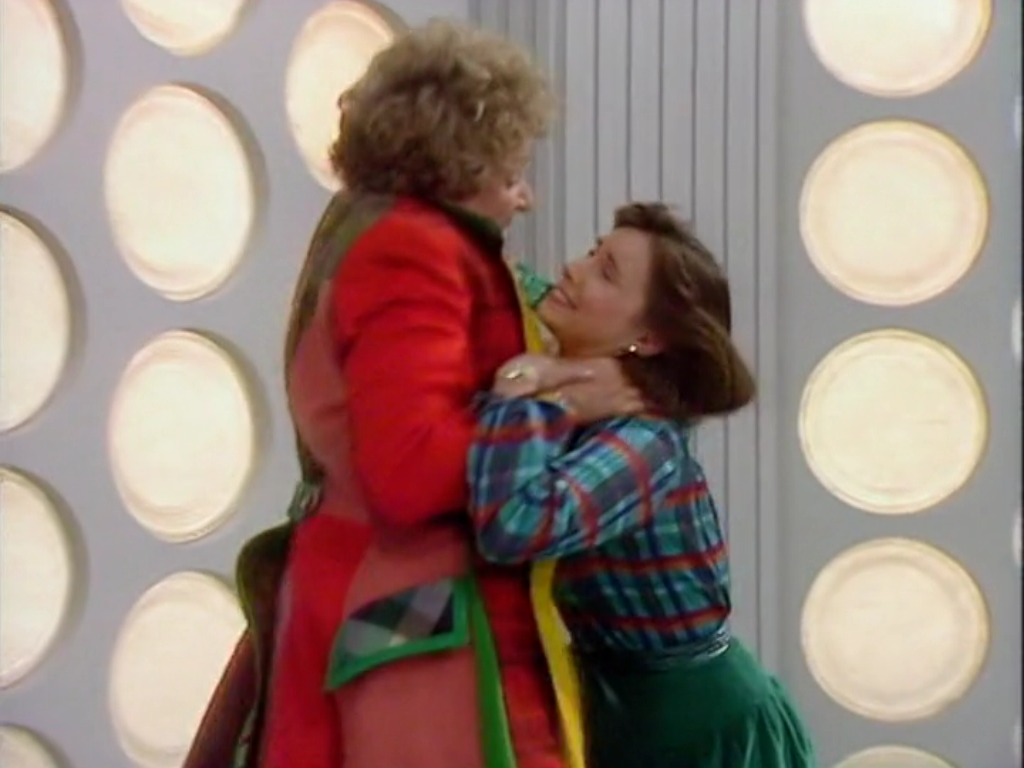
#076: The Ark in Space

Baker’s second story, “The Ark in Space” for me locks in the overall tone of producer Peter Hinchcliffe’s era. It’s the first hints we get of the gothic, dark tinged stories that he (and script editor Robert Holmes) dreamed up. Fans of the films Alien and Aliens will see some certain similarities; people in suspended animation in the future, an alien that infects other species to reproduce, a confined area with no easy escape. “The Ark in Space” is a remarkably effective story, one that uses its run-time almost perfectly. This is a story which lets the Doctor and his two companions (Sarah Jane and Harry) interact with just each other and not worry about a supporting cast for the entire first episode and gets away with it wonderfully, after all. With so many “it’ll eat you from the inside” type stories now, I suspect “The Ark in Space” is a bit old hat but at the time I can only imagine how freaked out audiences must have been.

Sarah Jane had been introduced the previous year (and is probably to this day one of the original series’ all-time favorite companions; considering they brought her back for the new series and then gave her a multiple-season spin-off of her own, that’s a reasonable assumption to make) but poor Harry gets an outing here. Harry is a character whom, if I remember correctly, was supposed to be the muscle opposite a much older actor playing the Doctor. Then they hired Baker and oops, Harry was no longer needed. As a result he ends up a bit bumbling to give him something to do, but here’s the thing: he’s got charm thanks to actor Ian Marter. It’s a real shame the character didn’t get to stick around, because I love him.

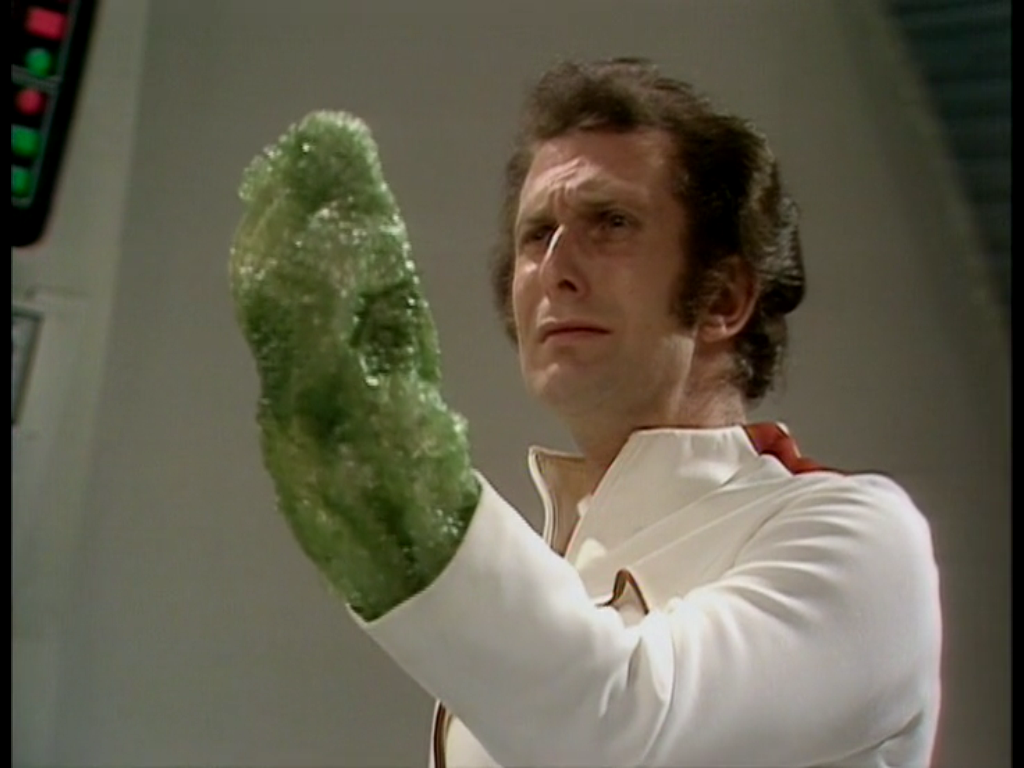
Some of the effects have been redone for the DVD as an optional extra. Halfway through I switched over to them just to see what the new version of the outer space shots looked like. Are they better? Yes, a thousand times so. Were the old ones bad? Well, no… dated, yes, but not bad. Honestly I’m surprised they didn’t go whole hog and replace the “oh no, he’s got green bubble wrap on his hand” special effect while they were at it. Ultimately unnecessary but inoffensive in terms of a change. But anyway, “The Ark in Space” was a real joy to watch; I’m sorry it took this long.
(more…)

50 Years of Doctor Who: Jon Pertwee

It’s the end of March, which means it’s time for another Doctor Who viewing roundup… except this month will be a little shorter than the first two. I’d told myself that each month I’d watch at least three stories from the assigned Doctor, but this was the first month where I barely hit three stories. It didn’t have to do with quality of stories available, but rather the amount of free time I had this month. Sorry, Jon Pertwee fans.

But anyway, Pertwee’s five years on the show were a huge change in general for Doctor Who. Not only was it in color, but he was trapped on Earth for his first three seasons and worked with UNIT, the United Nations Intelligence Taskforce (introduced in Patrick Troughton’s story “The Invasion”) as their scientific advisor. It’s a very different sort of era, although even within it there are distinct sections…

Dr Who Spearhead from Space 1
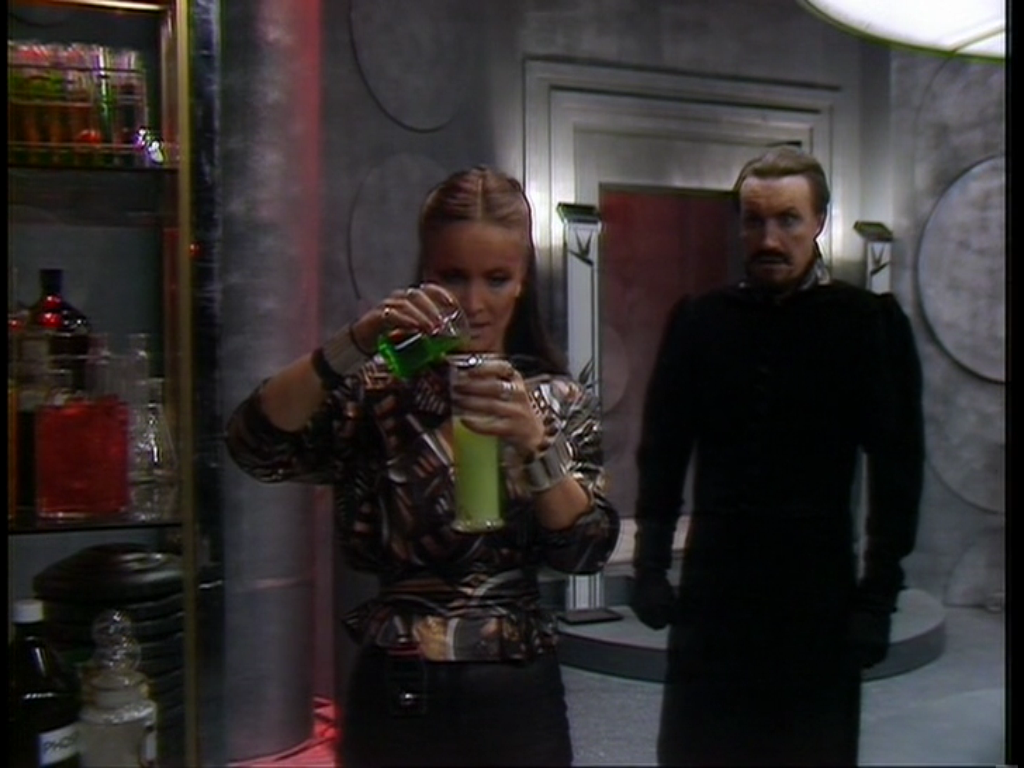
#051: Spearhead from Space

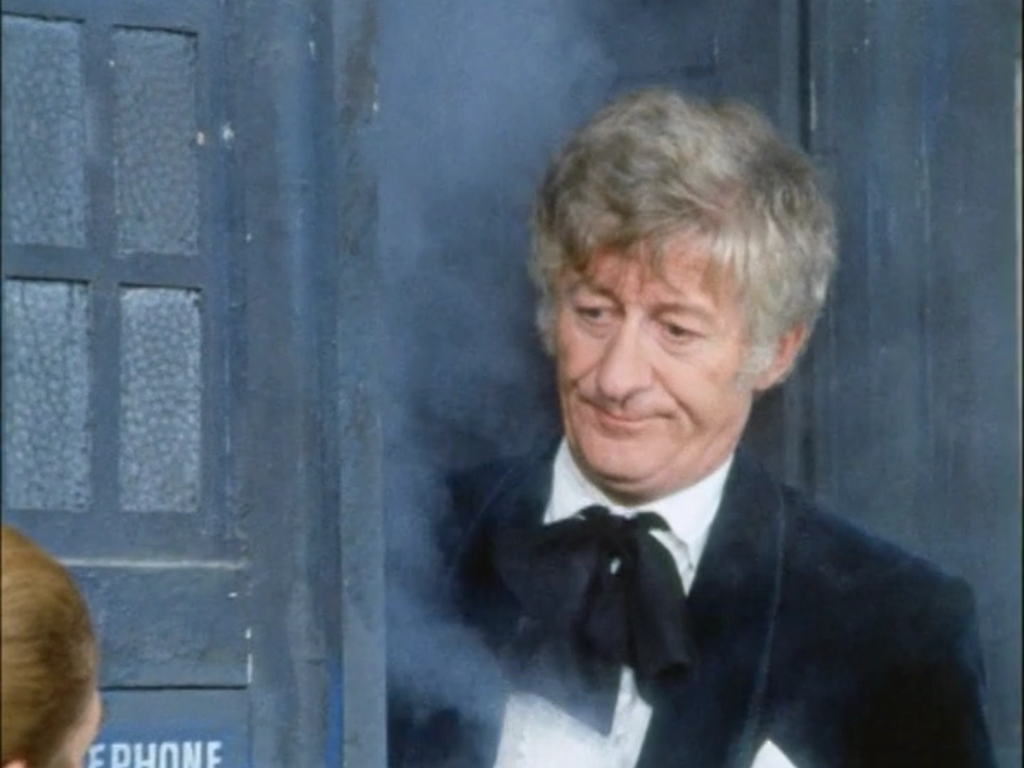
Pertwee’s debut, this story (and the three that followed) were a very serious take on Doctor Who. I like to think of this as the “competent UNIT era” because it was only in Season 7 that we really got that. The Brigadier is ruthless and a strong military man, and new companion Dr. Liz Shaw is a Cambridge professor who is supposed to be a near-equal for the Doctor.

I say “supposed to be” because she’s barely in the second half of this story, once the Doctor is up and running around and working with UNIT and the Brigadier to stop an invasion of strange plastic-inhabiting creatures known as the Autons. (Fans of the modern series might remember they came back in the debut episode “Rose.”) It’s a little slow paced at times, but “Spearhead from Space” is entertaining. I like that you’re kept in the dark for the majority of the story on what’s really going on, and the immediate clash between the Doctor and his new “employers” in the form of a military group is brought up effectively. As a throwing the glove on the ground and announcing that this is the way the series will now be, it works.

Dr Who Daemons
#059: The Dæmons

“The Dæmons” is one of those stories where it’s been proclaimed a classic for as long as I can remember. I remember seeing it in the ’80s (back when the BBC only had some black and white prints in their archives) and enjoying it a great deal. So as a result, for the Pertwee stories I watched, this one ended up being the biggest disappointment when I revisited it. There is an awful lot of padding in this story about the evil Master trying to revive (and gain power from) an ancient alien known as a Dæmon. The Doctor is constantly diverted away from the main story, presumably to stretch things out. New companion Jo is adorable, though, which goes a long way. And UNIT? Well, they’ve started to slide into buffoon territory. They’re not out-and-out incompetent, but they’re mostly used to help stall. (Although Sgt. Benton’s sharp-shooting is presented as quite effective. Sgt. Benton’s groovy red pants, perhaps not so much.)

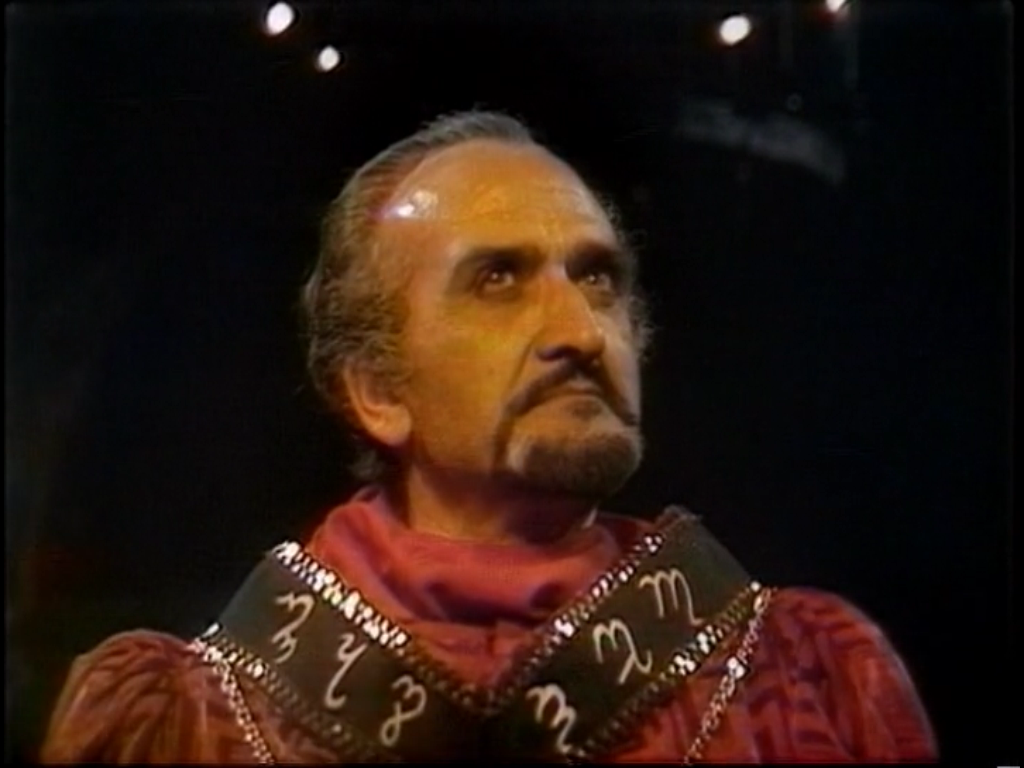
This was also the final story of the season that introduced the Master (think Moriarity to the Doctor’s Holmes) as an adversary to the Doctor, one that used him in every single story. I’d say he’d gotten tired by this point, but actor Roger Delgado (who gets second billing!) is so good that I don’t care that he’s overused. He’s amazing and somewhat hypnotic to boot. But still, it’s hard to deny that this story is a bit silly in places, never bothers to fully make sense, and has a god-awful resolution. The memory cheated on this one. It’s not bad, per se, but it is by no means a classic. I’m actually fine with waiting another 25-odd years to see this one again.

Dr Who Carnival of Monsters
#066: Carnival of Monsters

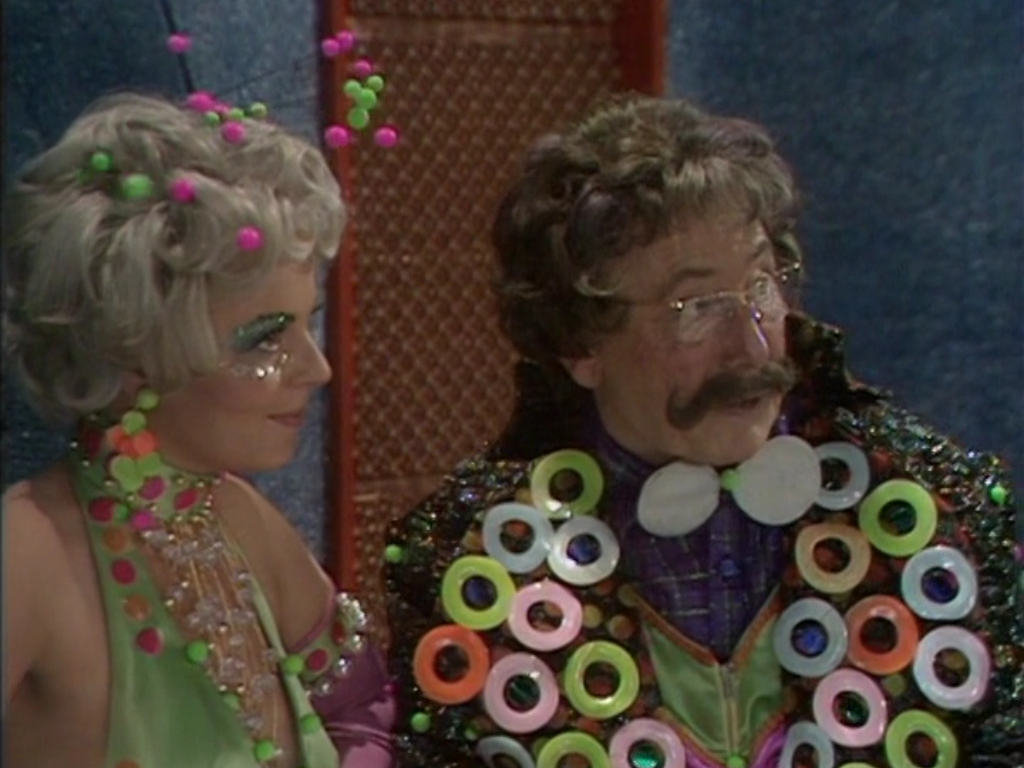
For this story, I had two friends (Erik and Jason) come over to watch it, which was a fun way to experience it. Erik had seen it somewhat recently, it’d been years for me, and Jason had never seen it. It’s a bit of a run-around with the Doctor and Jo isolated from the other main characters but it’s an enjoyable (if perhaps atypical Pertwee) story. No longer Earth-bound, this story traps the Doctor and Jo inside a strange alien zoo machine while an entirely different story unfolds on the planet where the machine is located. The two don’t connect until the final episode, but there’s such a strange air about “Carnival of Monsters” that it works. The two circus/carney folk who have the machine are a riot (and not just because of their ultra-crazy outfits), the aliens on the planet are wonderfully bureaucratic, and the Doctor and Jo manage to carry a story where they go around in circles for a hell of a lot of time. It’s not like most Pertwee stories (it’s short, it’s concise, there’s no UNIT, no karate-chopping, not set on Earth, no long chase scenes) but it’s very much like a typical Doctor Who story, if that makes sense. A fun way to wrap up the Pertwee stories for March.


And that’s it! I wish I had more to say about Pertwee, but the best laid plans and all that. (Even this entry is a little shorter than I’d hoped. Once again, time restraints and all.) In August (details still being worked out) I might be revisiting some earlier Doctors so I’m hoping to squeeze in a Pertwee then. But we shall see…

Five Things That Make Me Happy (part 20)

Kinfolk Magazine
Kinfolk_Vol7_CoverOne of the things I like to buy at the store down the street (Trohv) is Kinfolk magazine, a slick squarebound quarterly publication. It’s about entertaining, about art, about photography, about cooking… It’s not really quite like anything else out there. I love reading their essays, as much for things that inspire me as things that are completely outside of my own personal wheelhouse. Even if the subject isn’t grabbing me in one particular piece, there’s almost always a great photograph that goes alongside it that makes it all work quite nicely. The latest issue had an ice cream theme, and it was slightly mouth-watering at times. Not that I minded to much, because…

Cinnamon Vanilla Ice Cream
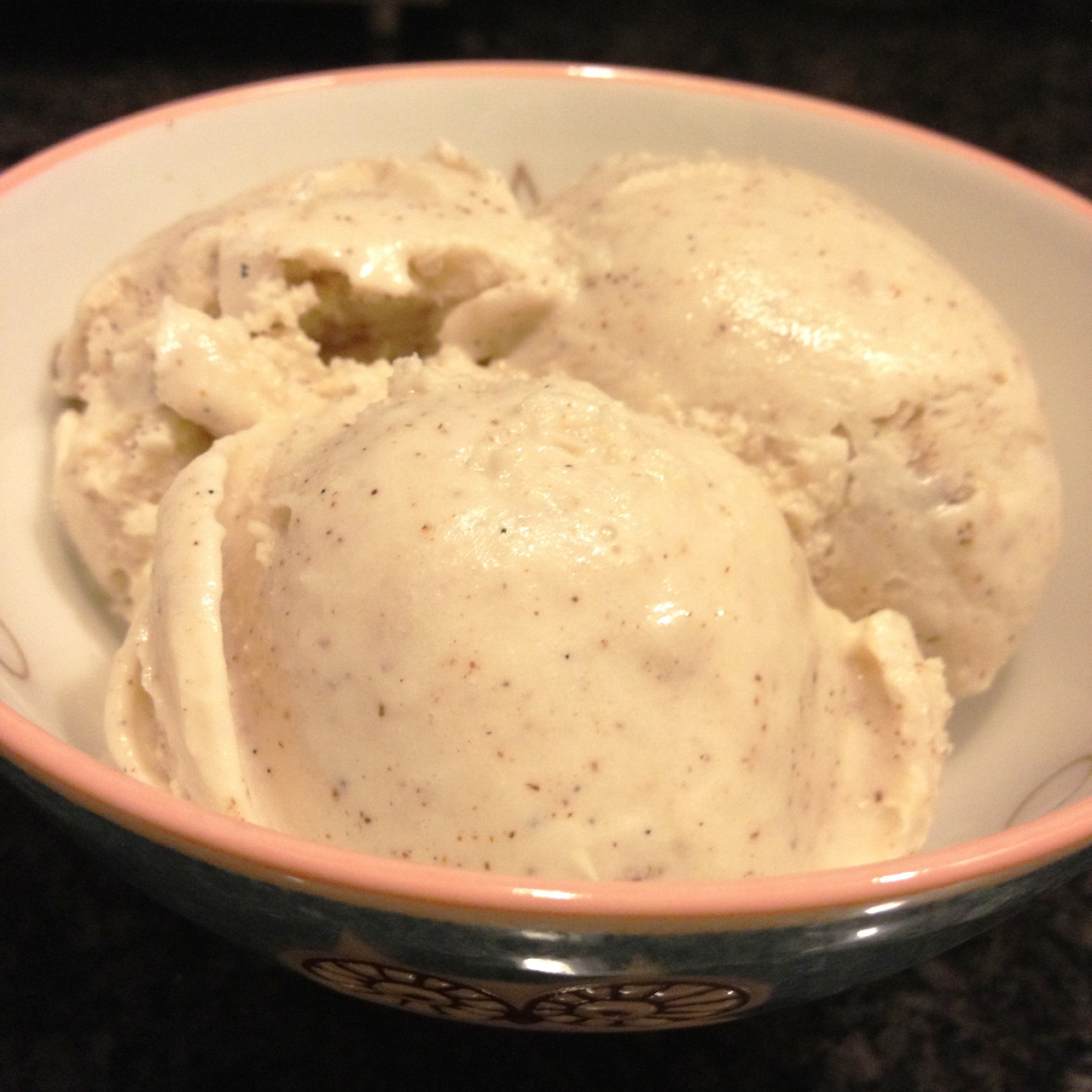
One of the pieces in the latest issue was an interview with two ice-cream makers. When asked for their favorite flavors, one that both of them mentioned was cinnamon vanilla ice cream. “Hmmm,” I thought to myself, “I bet I could make that.” And so, I did.

Cinnamon Vanilla Ice Cream

As it turns out, adding cinnamon to my vanilla ice cream recipe is a big hit. I love the vanilla ice cream recipe (thanks Alton Brown!) but the touch of cinnamon makes it that much more amazing. I’ll be trying some new flavors of ice cream this summer, but I think this is one I’ll be keeping in my back pocket in general. Homemade ice cream in general is such a pleasure; over the winter I barely made any (which my waistline thanks me for, at least) but I’m going to try and break out the ice cream maker a bit more this year.

Ticket to Ride
Ticket to Ride is one of those board games that I’ve been seeing for years, now. I first encountered it at my friends Trevor and Matt’s house, when I saw some people playing it. It looks deceptively simple—collect colored trains to form connections between cities to earn points—but it’s the sort of game that clearly requires a lot of strategy and wits. I’ve held off on buying it (another huge box to store!) but I recently discovered that the game company also released a version for the iPad. Having now played it for a few days… it’s wonderfully addicting. Evilly so, in fact. And I haven’t even played it against other people (either online or locally), just against the computer. Absolutely loving it. Board or electronic game, this one is clearly a winner.

No More Amy Pond
Non-Doctor Who fans can just skip along to the next item. But I am genuinely happy that when Doctor Who returns in a couple of days, it will be without Karen Gillan, the actress who played the character of Amy Pond for the past two and a half years. I really didn’t like the character, but the bigger problem wasn’t the writing for Amy Pond but Gillan’s acting. She just wasn’t up to the level needed for such a major role, and she pulled down the show a great deal. So knowing that there are eight episodes ahead without Gillan? Well, I’m delighted. (Sadly her co-star Arthur Darvill is also gone, but it’s a fair trade.) Her replacement, played by Jenna-Louise Coleman, already feels like a real improvement.

A Great 40th Birthday
Cannoli CakeToday I finally hit the big 4-0, it’s true. And in celebrating it this year, the thing that’s struck me the most was that I’m really lucky to have so many great friends that it was actually difficult to make a guest list because I wanted to invite everyone I knew. I ended up having a medium-sized party over the weekend at the tavern on the ground floor of our building, and as much as I would’ve loved to double the guest list, my gut feeling on how many the facility could hold was more or less dead-on accurate. I had a great time talking with my friends, and the food and cake were both excellent, and at the very end the manager provided us with a nice champagne toast. Then today, two co-workers (and good friends) took me out to lunch and provided cake in the afternoon (with a cannoli on top!), followed by getting a massage in the evening.

Add in the over 200 birthday greetings on Facebook (no, seriously, we’ve crossed the 200 mark), and it’s been a very pleasant way to enter the new decade. Fortunately, I’m not one to get freaked out over those milestone ages, but still, a good way to do so. (Now ask me again when I turn 70 and that might be another story entirely…)

40th birthday toast

50 Years of Doctor Who: Patrick Troughton

The second month of my big Doctor Who re-watch is the Patrick Troughton era. Troughton had the unenviable task of taking over the show after William Hartnell was fired (and at which point the show’s producers came up with the idea of the Doctor being able to regenerate his body into a new form, although that exact phrase hadn’t been invented until a later era). Hartnell wasn’t the only thing being ditched by the producers, though. The new showrunners threw out the idea of the purely-historical story (after Troughton’s second story “The Highlanders” we wouldn’t see one again for another fifteen years), switching to a popular “base under siege” format involving alien attacks.

Like Hartnell’s era, the three seasons of Troughton’s time on the show are rather incomplete in the BBC Archives due to an old policy of purging old television shows over time. Unlike Hartnell, Troughton’s era is missing far more (thanks to there being less countries overseas that had bought prints that would be recovered years later); no complete stories exist from Troughton’s first season, and only one (“The Tomb of the Cybermen”) exists from his second season. Watching the stories (and pieces of partially-recovered stories), it’s all the more a pity because there’s something about Troughton’s physical performance that can’t be quite captured via script or even audio recording. Watching him leap and jump about the screen, he’s a true performer who brought so much more to the role than he was ever asked. Most Doctor Who fans hold out hope for more stories of his being recovered; every new piece and fragment found is a virtual goldmine.

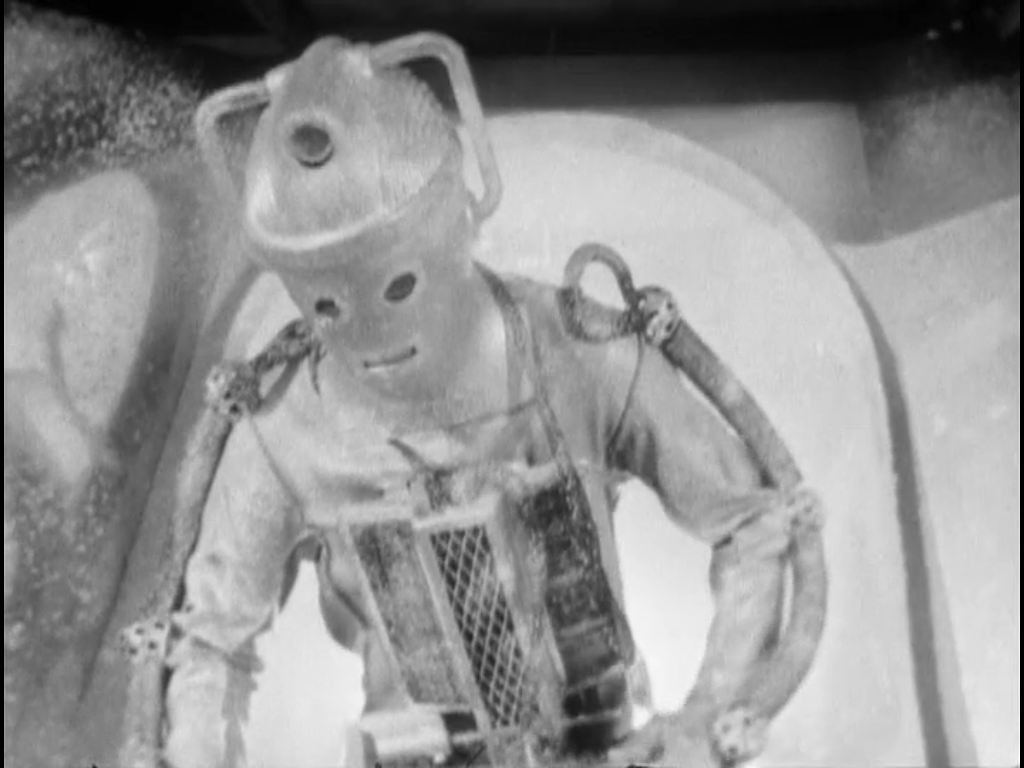
Dr Who Tomb of the Cybermen
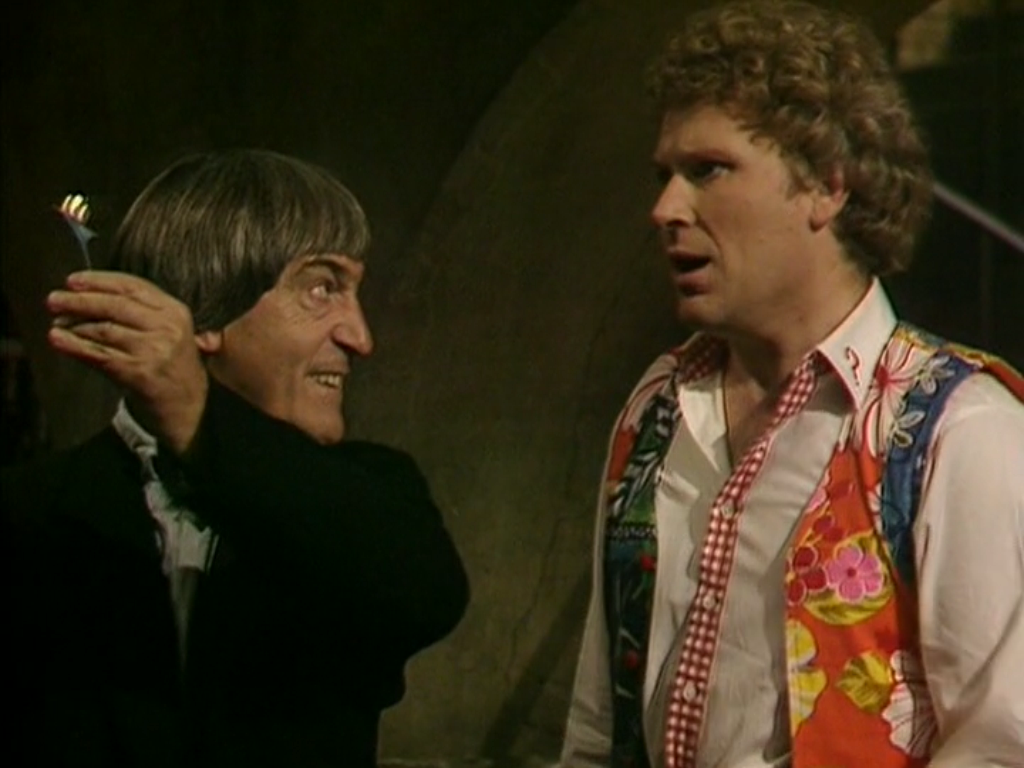
#037: The Tomb of the Cybermen

The oldest fully-complete Troughton story, which kicked off his second season. This story was originally one wiped from the archives entirely, and only returned to the BBC in late 1991. I remember watching it a year or two later, excited about seeing an previously missing story that was thought to be a masterpiece. Now that I’m rewatching it 20 years later? It doesn’t quite hold up. There are some good bits here and there. Having previously joined the Doctor and Jamie in the season finale, new companion Victoria gets some great scenes with the Doctor; they’ve got a lovely surrogate-father/daughter relationship right off the bat. On the other hand, she’s religated to damsel-in-distress more times than one can count. The bigger problem is the casual racism in this story, with the treatment of Toberman (the only non-white character). He’s every bad stereotype of the African character; the muscle-bound, brainless slave who lives to serve his masters. It’s honestly appalling. Once you skirt around this impossible-to-ignore problem it’s also just a so-so story; the idea of finding the last remnants of the evil Cybermen race and someone trying to resurrect them from their tombs is a great one, don’t get me wrong. But as soon as the secret trap of the Cybermen is revealed, it’s a story that falls apart once you try to apply logic. “The Tomb of the Cybermen” is one of those stories that works only until you start to think about it afterwards. There are (much) worse stories out there, but this is sadly not the masterpiece that my 19-year old self remembered.
(more…)

50 Years of Doctor Who: William Hartnell

Doctor Who‘s first episode aired on November 23, 1963. So while for most people, the big 50th anniversary this November will be one day earlier marking the assassination of President John F. Kennedy, I’ll be celebrating the debut of my all-time favorite television show.

With eleven different actors playing the Doctor in a major form on the television show, I’ve decided to take the first eleven months of 2013 to revisit each era of the show in the form of a re-watch. I’ve identified three stories for most months (with the exception of August, which I’ll talk about in greater detail when we get there) to make a concerted effort to view, plus several “bonus rounds” to add in if I have the time and willpower. For each month, I tried to try and select in a way that provided a variety of supporting cast characters, approaches, and the like. We’ll see how well this goes…

January kicks off the great re-watch with William Hartnell, who played the role of the Doctor from 1963-1966. His era was different than any to follow, with a mixture of “historical” (set in Earth’s past with no science-fiction elements aside from the time machine that brought them there) and science-fiction stories (either in Earth’s future, or on other planets). By the time the show ended, it had discovered a new format (modern-day with science-fiction elements), gone through several casts and production teams, and finally inexplicably survived the recasting of the title role. Both Hartnell and his successor Patrick Troughton also have large swathes of episodes missing from the BBC Archives due to a mass purging of older television shows over the years, before the age of home video.

More importantly, the Hartnell era is pretty great. With little to look back on, the show reinvented itself on a regular basis and took chances bigger than any other era has since. In my story selections, I tried to find a mixture of historical and science-fiction, as well as hitting as many of the companions (those who travel with the Doctor in the TARDIS) as I could. I ended up watching 10 stories (or 40 episodes) in all, and while I could blather on about each one of them for some time, just a quick comment on the viewing choices.

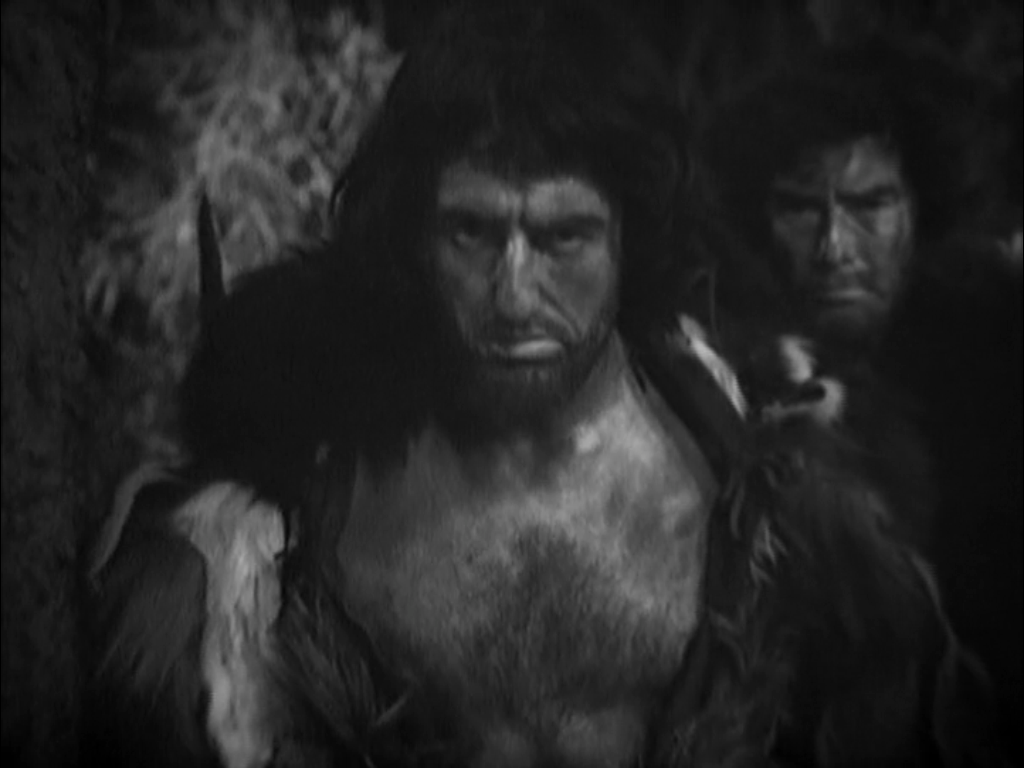
Dr Who An Unearthly Child
#001: An Unearthly Child

The very first story, its initial episode is fantastic; it introduces the Doctor, his granddaughter Susan, and inquisitive teachers Ian and Barbara who get sucked up into the adventure against their will. Unfortunately, episodes 2-4 are set in the caveman era and are a bit problematic. The story itself isn’t that bad in theory (with a bit of an allegory over the arms race using a quest for fire) but the direction/acting involving the cavemen is just teeth-gratingly bad. There’s a reason why many people watch episode 1 and then skip ahead to something else, rather than episodes 2-4 of this opening story.

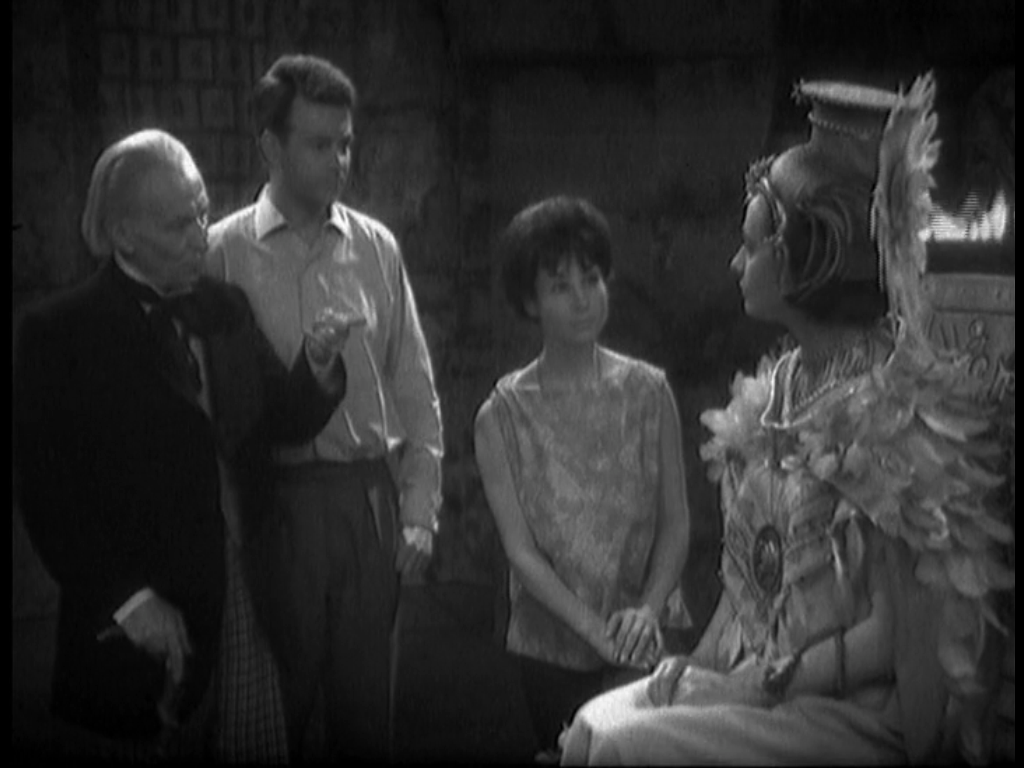
Dr Who Aztecs
#006: The Aztecs

“The Aztecs” is easily one of the best Hartnell stories, there’s no doubt. The plot is a fun one; landing in 15th century Mexico, schoolteacher Barbara is mistaken for the reincarnation of the high priest Yetaxa and treated as a god, and she decides to try and save the Aztecs by attempting to stop their practice of human sacrifice. It’s a marvelous story, with Barbara struggling to try and fight the tide of history even as the Doctor tries to explain that her attempts are futile. “You can’t rewrite history! Not one line!” is a statement of the Doctor’s that quoted often, and it sums up the story well. “The Aztecs” is the rare script that 50 years later could be reused with no problem whatsoever.

(more…)